
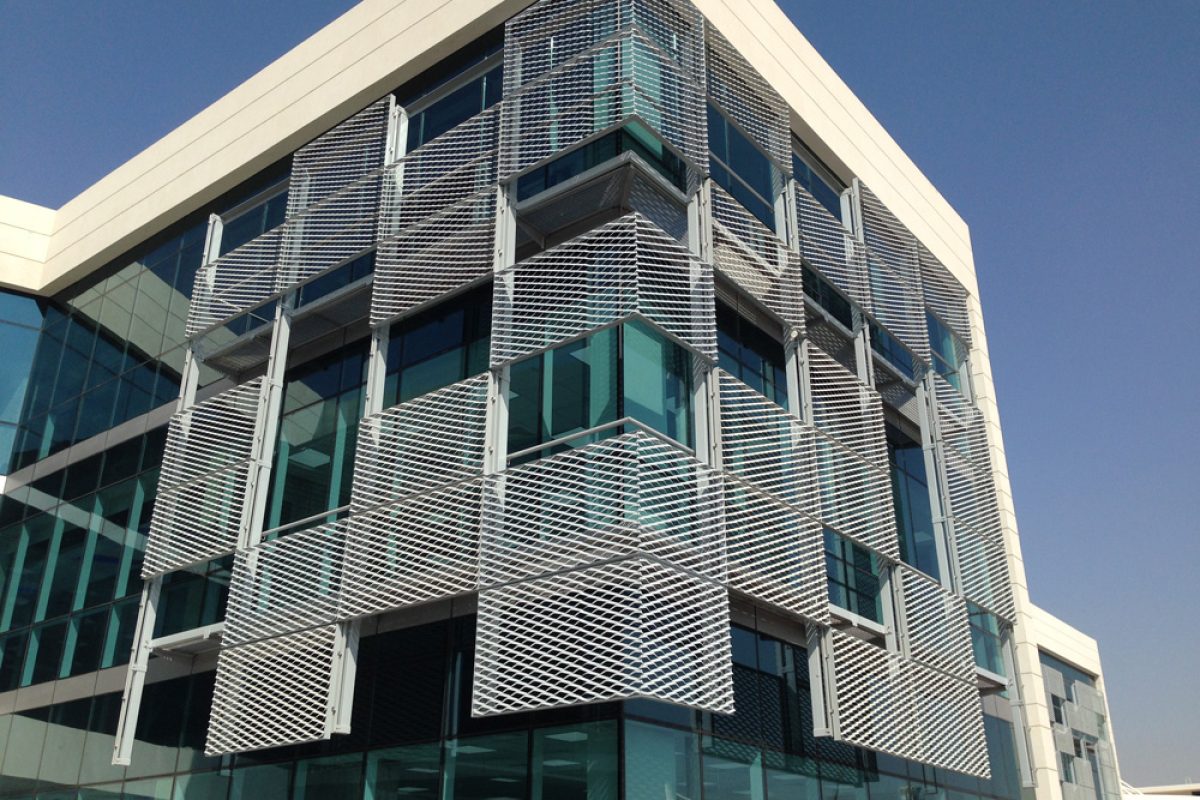
What are the requirements for surface treatment of metal mesh for exterior building wall cladding?
In exterior architectural wall cladding projects, metal mesh serves as the skeleton or reinforcement layer of the cladding system. The quality of its surface treatment directly determines the durability, safety, and aesthetics of the entire wall system.
Due to differences in chemical composition and electrochemical characteristics, metal meshes of different materials—iron wire mesh (ordinary carbon steel), stainless steel mesh, and aluminum mesh—require completely different surface treatment solutions.
The following describes the most suitable surface treatment requirements for these three materials, providing a reference for design, construction, and quality inspection personnel.
Iron Wire Mesh (Ordinary Carbon Steel Mesh)
Iron wire mesh (e.g., cold-drawn wire before galvanizing, black iron wire) is the lowest-cost and most widely used type, but it is also the most susceptible to corrosion. Without proper treatment, iron wire mesh can rust within weeks in outdoor humid environments, causing the cladding to bulge and peel off.
The most suitable surface treatment solution is:
Hot-dip galvanizing + phosphating/passivation + compatible primer
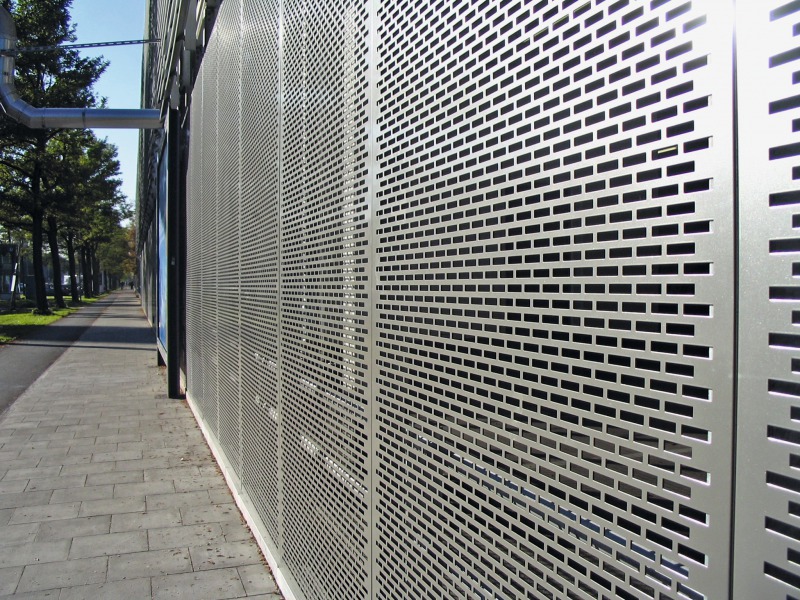
1. Core Treatment: Hot-Dip Galvanizing
- Standard reference: GB/T 13912 Metallic coatings – Hot-dip galvanized coatings on iron and steel articles
- Coating thickness requirements:
- Wire diameter ≥3mm: local thickness ≥70μm, average thickness ≥85μm
- Wire diameter 1.5mm–3mm: local thickness ≥55μm, average thickness ≥70μm
- Appearance quality:
The coating shall be continuous, smooth, free from uncoated areas, peeling, zinc lumps, or blisters. Slight dullness is permissible, but white rust is not allowed (white rust indicates improper wet storage beforehand). - Adhesion:
Tested by hammering or bending; the coating shall not delaminate or peel off.
2. Sealing and Conversion Treatment (Mandatory)
The surface of a hot-dip galvanized layer naturally forms a basic zinc carbonate film in air. This film has poor adhesion to cement-based claddings (e.g., mortar, stone-like paint) and slowly reacts in alkaline environments.
Therefore:
- Phosphating:
Apply a specialized zinc-based phosphating solution to form a dense phosphate conversion film on the galvanized surface, increasing roughness (Ra 5–15μm), and improving adhesion to organic coatings or bonding agents. - Passivation:
If no subsequent organic coating is applied, chromate or chromate-free passivation solutions may be used for sealing to improve resistance to white rust.
3. Primer System (Matching the Cladding Material)
- For cement-based claddings (plastering mortar, waterproof mortar):
A metal-specific bonding agent (e.g., epoxy-modified acrylic bonding agent, styrene-acrylic emulsion-based bonding agent) must be applied. Direct application of cement mortar onto the galvanized layer is prohibited. - For paint-type claddings (fluorocarbon paint, acrylic paint):
An epoxy zinc-rich primer (dry film thickness ≥60μm) or phosphating primer must be applied, followed by intermediate coat and topcoat. - For powder coating:
After galvanizing, the surface must be roughened or sandblasted, followed by spraying with outdoor-grade polyester powder (thickness 60–80μm), which provides excellent weather resistance after curing.
4. Electro-Galvanizing (Cold Galvanizing) is Strictly Prohibited
Electro-galvanized coatings have a thickness of only 5–15μm and last less than 2 years in outdoor environments.
For any exterior wall cladding application, the design drawings must clearly specify:
“hot-dip galvanizing, electro-galvanizing not permitted.”
Stainless Steel Mesh
Stainless steel mesh, thanks to its excellent corrosion resistance, is commonly used in high-end buildings, coastal areas, or industrial corrosive environments.
However, the focus of its surface treatment is not “corrosion protection,” but rather enhancing cladding adhesion and maintaining the integrity of the passive film.
The most suitable solution is:
pickling passivation + mechanical roughening/sandblasting + specialized bonding agent
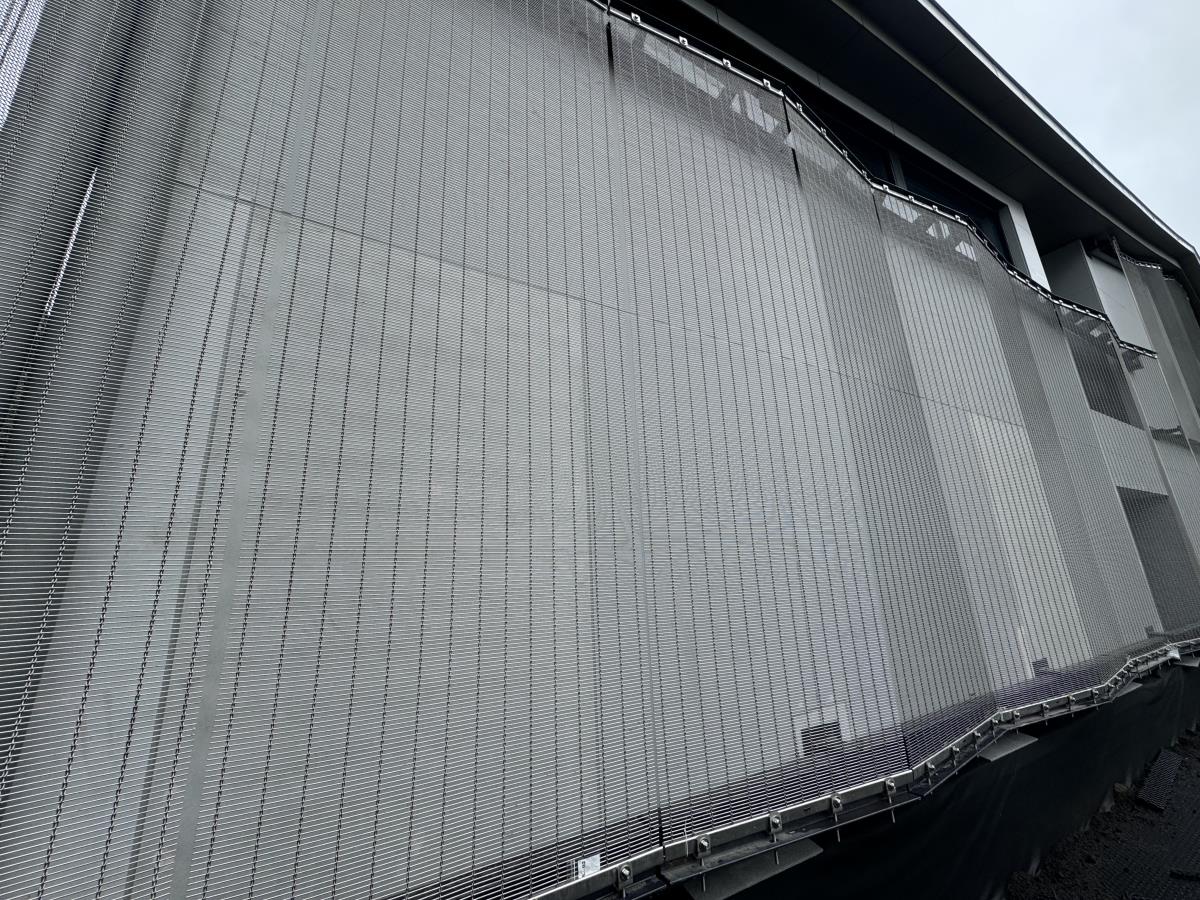
1. Material Selection
Austenitic stainless steel 304 (S30408) or 316L (S31603) is recommended for exterior walls. 316L contains molybdenum, providing stronger resistance to chloride ion corrosion, making it particularly suitable for coastal areas or environments with deicing salt.
Stainless steel 201 is not recommended due to its insufficient corrosion resistance, as it will rust in a short period.
2. Pickling Passivation Treatment (Essential Process)
- Purpose:
To remove the iron-rich oxide scale formed during hot rolling or cold drawing, as well as the chromium-depleted layer in the heat-affected zone of welding, and to restore and thicken the chromium-rich passive film on the surface. - Process requirements:
Use a mixed nitric acid + hydrofluoric acid pickling paste or immersion solution. Treatment time is determined by the material thickness (typically 10–30 minutes), followed by high-pressure water rinsing to neutrality. - Effectiveness testing:
Use the blue dot test (potassium ferricyanide + nitric acid solution); the absence of blue color within 30 seconds indicates passivation is acceptable.
3. Surface Roughening Treatment (To Improve Adhesion)
Stainless steel surfaces are extremely smooth, resulting in very low bond strength with claddings such as cement and coatings. At least one of the following treatments must be performed:
- Mechanical roughening:
Use a rotating wire brush or belt sander to create uniform grooves 0.1–0.3mm deep in one direction on the stainless steel mesh surface. - Sandblasting:
Use brown corundum or quartz sand (particle size 0.5–1.0mm) sprayed at a pressure of 0.5–0.7MPa to achieve a surface roughness Ra of 25–60μm. Dust must be cleaned immediately after sandblasting. - Chemical etching:
Etch the surface using ferric chloride or sulfuric acid-dichromate solution (suitable for fine mesh openings) to create microscopic irregularities.
4. Compatible Bonding Agent
Within 2 hours after roughening treatment, a stainless steel-specific primer or high-adhesion bonding agent must be applied.
Recommendations:
- Epoxy phosphate primer: Dry film thickness 30–50μm, providing both passivation and adhesion functions.
- Acrylic copolymer emulsion bonding agent: Used for cement-based claddings, effectively bridging stainless steel and mortar.
5. Precautions
- After processing (cutting, welding) stainless steel mesh, the weld points and cut edges must be re-passivated.
- Do not mix with carbon steel tools (e.g., wire brushes, cutting discs) to avoid iron ion contamination leading to pitting corrosion.
- Clean gloves must be worn throughout the surface treatment process of stainless steel mesh to prevent contamination by hand sweat.
Aluminum Mesh
Aluminum mesh is lightweight and aesthetically pleasing, but it has two major weaknesses: first, the natural oxide film on its surface is thin and uneven; second, it reacts violently with alkaline claddings (cement mortar).
The most suitable surface treatment solution is:
anodizing + powder coating (or fluorocarbon coating)
Direct use without coating is strictly prohibited.
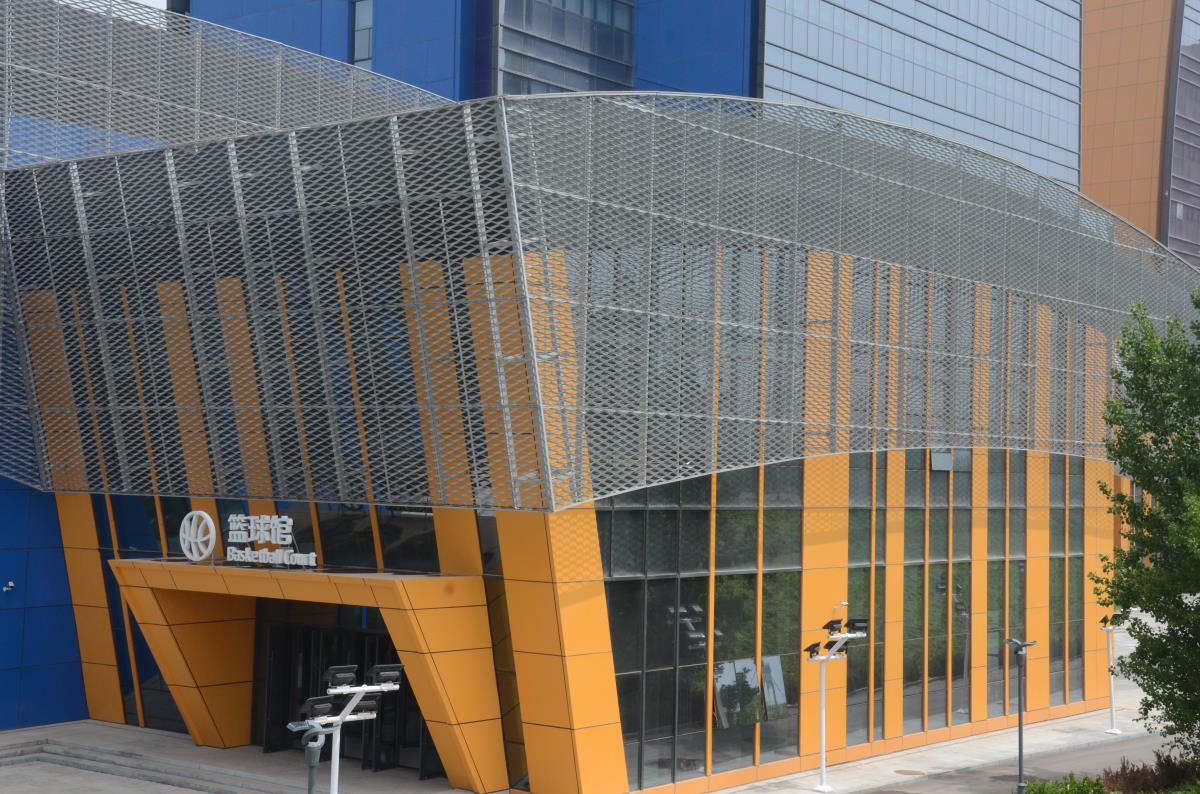
1. Anodizing Treatment (Foundation)
- Standard reference:
GB/T 5237.2 “Wrought aluminium alloy extruded profiles for architecture – Part 2: Anodized profiles” - Film thickness requirements:
- General outdoor environment: AA15 grade (average film thickness ≥15μm, local ≥12μm)
- Industrial or marine environment: AA20 or AA25 grade
- Sealing treatment:
After anodizing, hot water sealing or nickel salt sealing must be performed to close micropores, reduce surface energy, and improve contamination resistance.
2. Coating System (Mandatory)
Aluminum mesh with only an anodized film will still slowly corrode outdoors due to ultraviolet radiation and acid rain, and will have insufficient adhesion to claddings. Therefore, an organic coating must be applied.
Powder coating (mainstream choice)
- Pre-treatment: Dry after anodizing, then spray with outdoor-grade polyester-TGIC powder or indoor/outdoor polyurethane powder
- Film thickness: 60–100μm
- Performance:
- Resistant to accelerated weathering (QUV) for 1000 hours with gloss retention ≥80%
- Resistant to salt spray for 500 hours without corrosion
Fluorocarbon coating (premium choice)
- Use fluorocarbon paint with PVDF resin content ≥70%, together with epoxy primer and topcoat
- Total dry film thickness:
- Primer 5–10μm
- Topcoat 20–30μm
- Clear coat 10–20μm
- Characteristics:
- Superior weather resistance
- Good self-cleaning properties
- Service life of over 20 years
3. Special Isolation for Alkaline Claddings
Direct contact between aluminum mesh and cement mortar causes a severe aluminum-alkali reaction, producing hydrogen gas and leading to bond failure.
Therefore:
- Isolation coating:
On the basis of anodizing + powder coating, if aluminum mesh is used as reinforcement for cement-based claddings, an additional epoxy sealing primer (dry film thickness ≥50μm) must be applied, or a layer of non-woven fabric isolation layer must be adhered. - Alternative solution:
Use non-cement-based claddings such as acrylic-modified mortar or polymer waterproofing slurry, with pH value controlled below 8.
4. Prohibited Treatment Methods
- Chromate passivation (chemical oxidation): Film thickness only 0.5–4μm, not resistant to outdoor environments, cannot be used alone as a final surface treatment
- Unsealed anodizing: Micropores will adsorb contaminants, leading to early corrosion
- Direct use of raw aluminum or ordinary aluminum mesh: Absolutely prohibited
On-Site Inspection Key Points
Regardless of the material, the surface treatment quality of the metal mesh should be accepted before cladding construction:
- Appearance: No rust, oil stains, dust, or loose layers
- Adhesion (cross-cut test): According to GB/T 9286, the peeled area of coating or conversion film shall be ≤5% (Grade 1)
- Thickness: Spot-check using eddy current or magnetic thickness gauges, with no less than 5 points per square meter
- Roughness: Ensure compliance with design requirements
- For stainless steel: Add the blue dot test to verify passivation effectiveness
Conclusion
The surface treatment of metal mesh for exterior building wall cladding is not an optional “add-on process,” but a core factor determining the safety and durability of the entire wall system.
- Iron wire mesh relies on hot-dip galvanizing and isolation primer
- Stainless steel mesh must have its smooth, inert surface modified to create a reliable bonding interface
- Aluminum mesh requires dual protection through anodizing and coating, along with strict isolation from alkaline environments
Designers should select the most suitable material and surface treatment solution based on project environment, cost budget, and expected service life.
Process requirements and acceptance standards must be clearly specified in construction drawings to avoid quality compromises that may lead to exterior wall cladding detachment accidents.
Please email us via the contact form below, we’ll get back to you as soon as possible.