
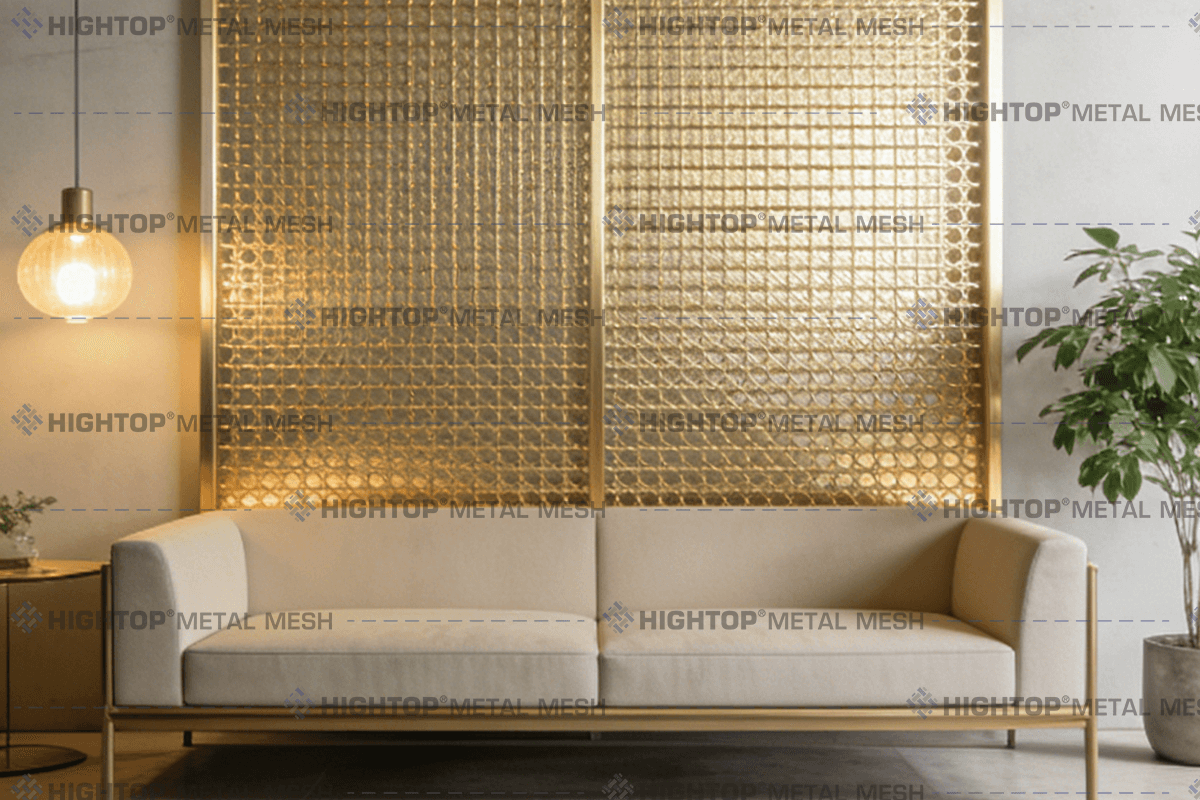
In contemporary interior design, material trends are evolving rapidly—from single-material dominance to multi-material integration, and from closed visual spaces to semi-transparent spatial expression. While traditional cabinet doors focused primarily on concealment and minimalist integration with surrounding walls, modern design increasingly emphasizes material storytelling and visual depth.
Among the emerging materials redefining cabinet door aesthetics, decorative crimped wire mesh stands out as a distinctive design element. Originally developed for industrial screening systems and architectural facades, this engineered metal fabric is now gaining popularity in high-end custom furniture and interior architecture.
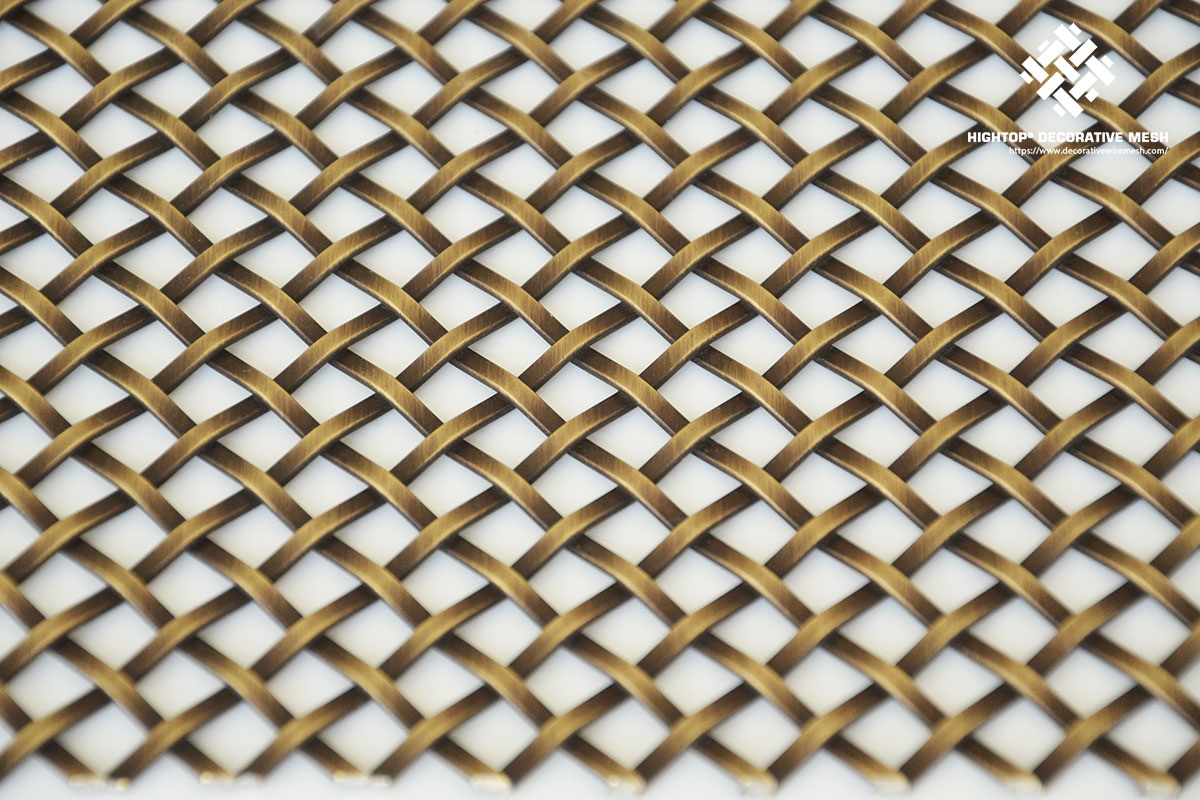
With its metallic texture, diverse woven patterns, and semi-transparent visual effects, decorative crimped wire mesh allows designers to introduce light interaction, airflow, and subtle spatial layering into cabinet doors. The result is a balance between functionality and artistic expression, transforming ordinary cabinetry into an architectural feature.
Beyond Simple Coverage: The Decorative Philosophy of Crimped Wire Mesh
Traditional cabinet doors typically rely on wood panels, glass inserts, or leather surfaces, with the primary goal of hiding stored items. Decorative crimped wire mesh, however, redefines this relationship between furniture and spatial perception.
Instead of fully concealing interior objects, the mesh creates a subtle visual veil. The contents remain partially visible, forming a dynamic interplay between privacy and display.
From a manufacturing standpoint, decorative crimped wire mesh involves a specialized “crimp-then-weave” production process. In this process:
- Metal wires are first pre-bent into wave-shaped crimps using precision molds.
- The crimped wires are then woven into a stable mesh structure.
This technique offers two major engineering advantages:
- Highly consistent mesh spacing
- Enhanced structural stability
Engineering testing indicates that precision-crimped metal mesh demonstrates 30%–50% greater deformation resistance compared to standard flat woven metal mesh.
This mechanical stability becomes especially important when mesh panels are used in large cabinet doors exceeding two meters in height, such as walk-in closets. The material maintains long-term flatness without sagging or distortion.
Another important design parameter is open area ratio. Depending on wire diameter and aperture size, decorative crimped mesh typically offers an open area between 40% and 80%. This high open ratio improves ventilation performance, making it particularly suitable for cabinets storing:
- Clothing
- Books
- Wine collections
- Electronics
At the same time, the mesh structure allows natural light diffusion, creating visually engaging shadow patterns that enhance interior atmosphere.
Scene 1: Entryway Display Cabinet
Creating a Sophisticated First Impression
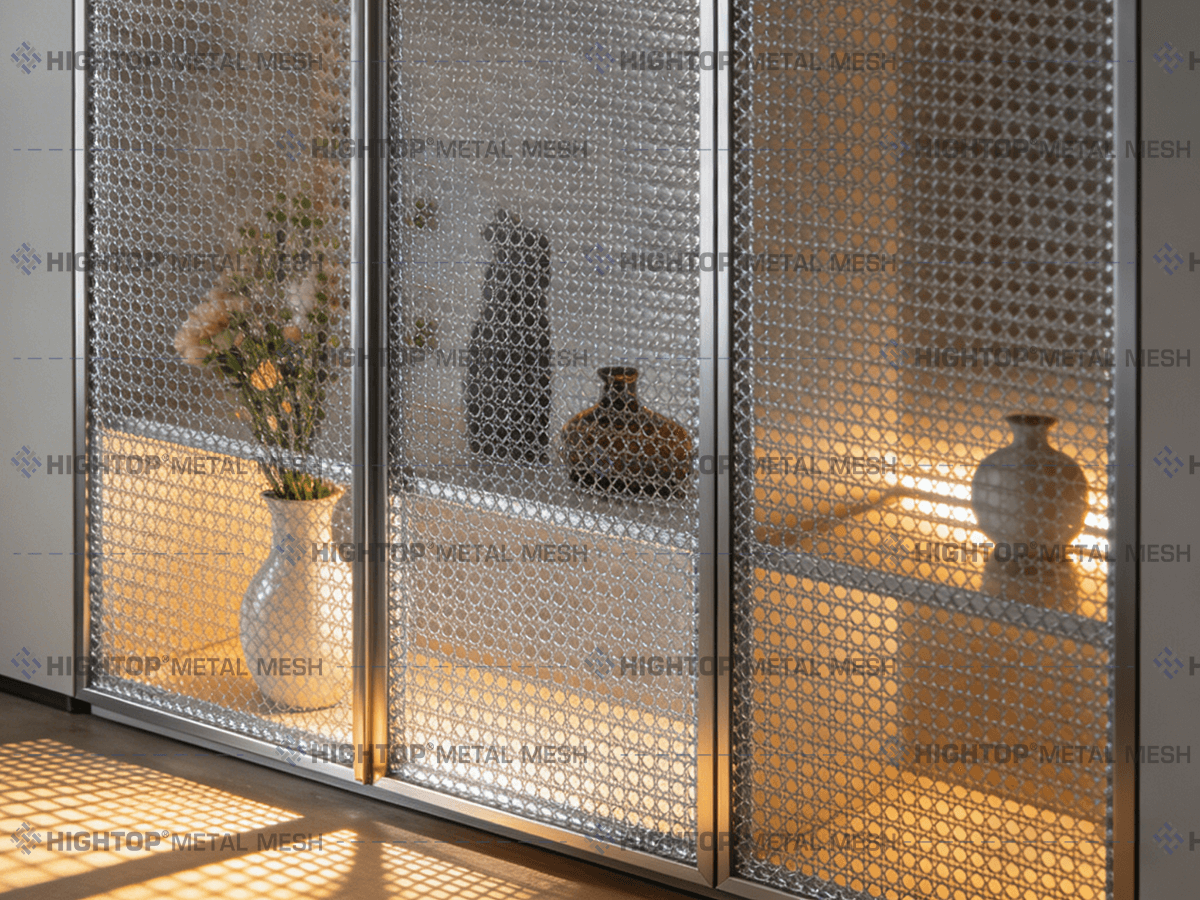
Image title: Light and shadow permeate the entryway cabinet, creating a hazy barrier.
The entryway serves as a transition zone between the outside environment and the interior living space. Because it forms the first visual impression of a home, the design of entryway cabinetry plays an important aesthetic role.
Compared with opaque wooden panels or highly reflective glass surfaces, cabinet doors featuring finely textured crimped wire mesh provide a more refined and artistic appearance.
For entryway cabinet panels, designers often recommend 304 stainless steel crimped wire mesh with:
- Wire diameter: 0.8 mm – 1.2 mm
- Aperture size: 5 mm – 10 mm
304 stainless steel offers excellent corrosion resistance, with salt spray resistance exceeding 480 hours, ensuring long-term durability even in humid climates.
When motion-sensor lighting activates inside the cabinet, light passes through the mesh and softly illuminates decorative items. The mesh structure casts layered shadows across the floor and surrounding surfaces, creating an illusion of spatial depth even within a small entryway cabinet.
This subtle interaction between light, metal texture, and stored objects turns a simple storage unit into a decorative focal point.
Scene 2: Living Room TV Cabinet
Balancing Heat Dissipation and Visual Elegance
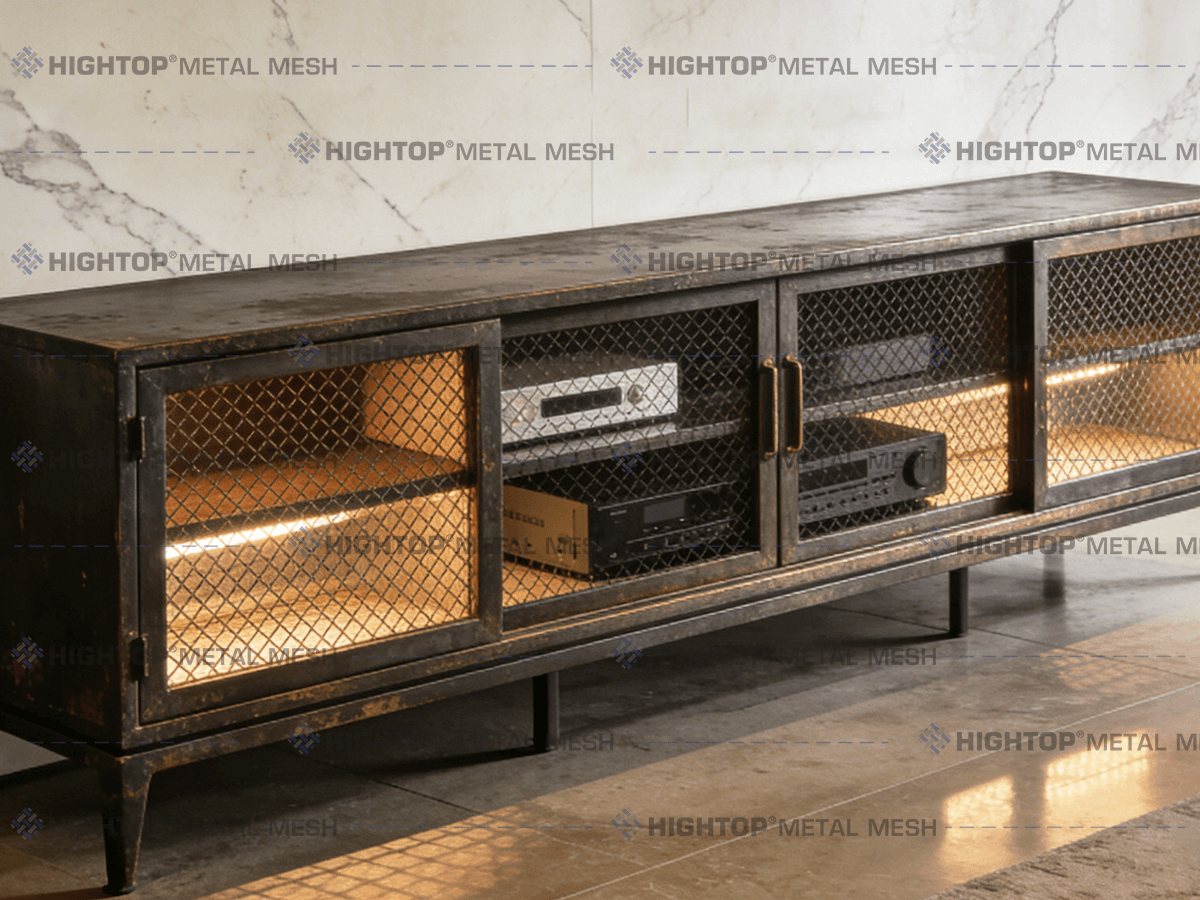
Image title: Technological Texture: A Living Room Heat Dissipation Feature Wall
Modern living rooms often include audio-visual equipment such as televisions, media players, and speakers, all of which generate heat during operation.
Completely sealing these devices behind wooden cabinet doors can lead to heat accumulation, potentially shortening equipment lifespan. Conversely, leaving devices exposed may compromise visual organization.
Decorative crimped wire mesh provides a functional solution. With an airflow permeability of 50%–90%, mesh panels allow continuous ventilation while maintaining a clean cabinet appearance.
For living room applications, designers frequently select retro-inspired decorative mesh finishes, including:
- Antique bronze
- Black titanium
- Brass crimped mesh
Brass alloy H62, for example, has a density of 8.50 g/cm³, offering a solid tactile quality and a rich decorative appearance after polishing.
Another functional advantage is infrared signal transmission. Remote control signals can pass easily through metal mesh structures, allowing users to operate devices without opening cabinet doors.
The contrast between cool metallic mesh textures and warm wooden flooring creates a striking visual balance—a hallmark of modern industrial interior design.
Scene 3: Kitchen Wine Cabinets and Sideboards
A Display Space That Breathes
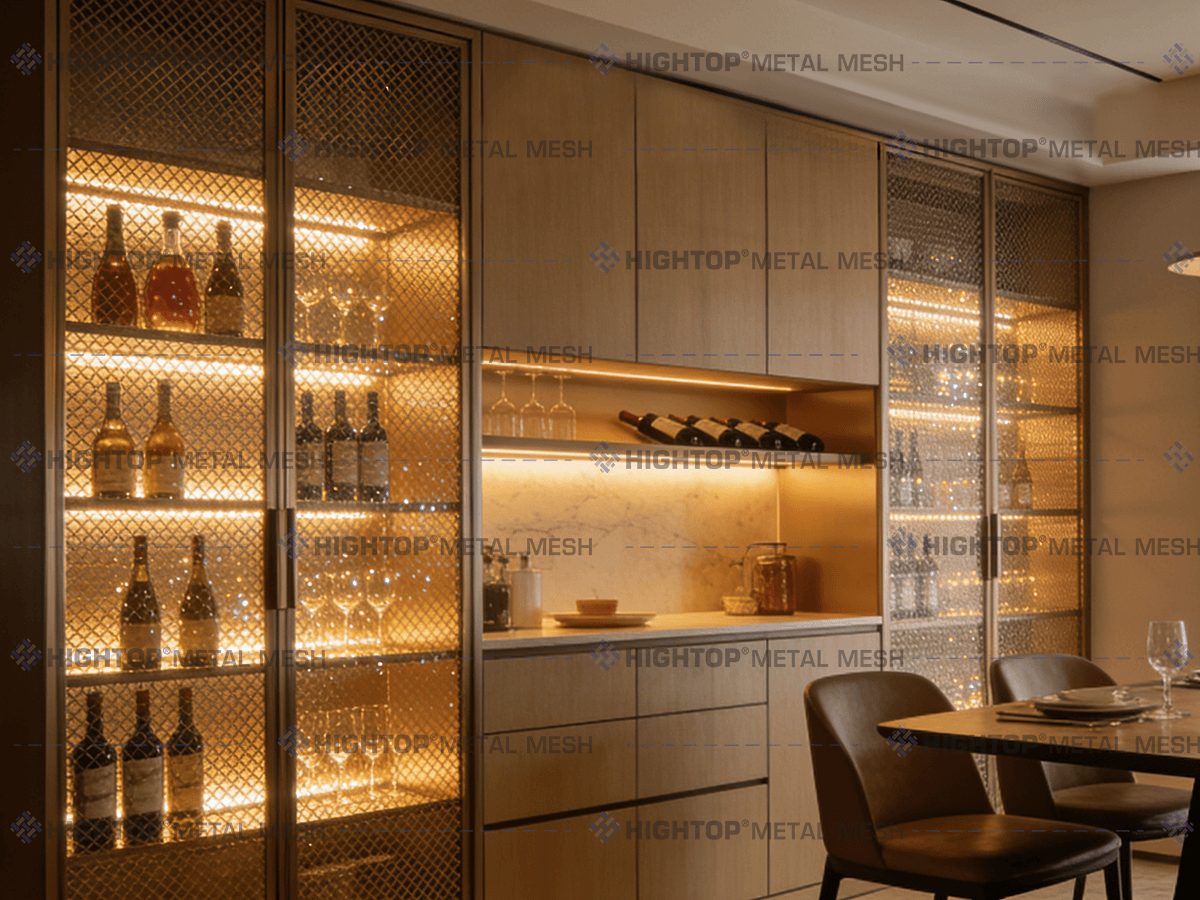
Image title: A Glimpse of Light: The Metal Screen of the Sideboard
Kitchen and dining areas require materials that provide both corrosion resistance and easy maintenance. Decorative crimped wire mesh made from 304 stainless steel is particularly suitable for these environments.
For wine cabinets or dining room sideboards, the following mesh specifications are commonly recommended:
- Wire diameter: 1.5 mm – 3.0 mm
- Aperture size: 15 mm – 25 mm
- Weave pattern: twill or patterned crimped mesh
These parameters provide a balanced effect: items inside the cabinet remain partially visible while dust intrusion is minimized.
When warm internal lighting illuminates the cabinet, the light filters through the mesh surface and gently highlights wine glasses, bottles, or tableware. The fine metallic grid becomes visible in silhouette, creating an elegant visual rhythm.
Through this design approach, the sideboard evolves from a purely functional storage unit into a decorative lighting element within the dining space, subtly evoking the atmosphere of a modern wine bar.
Scene 4: Walk-In Closet Doors
Privacy with Visual Order
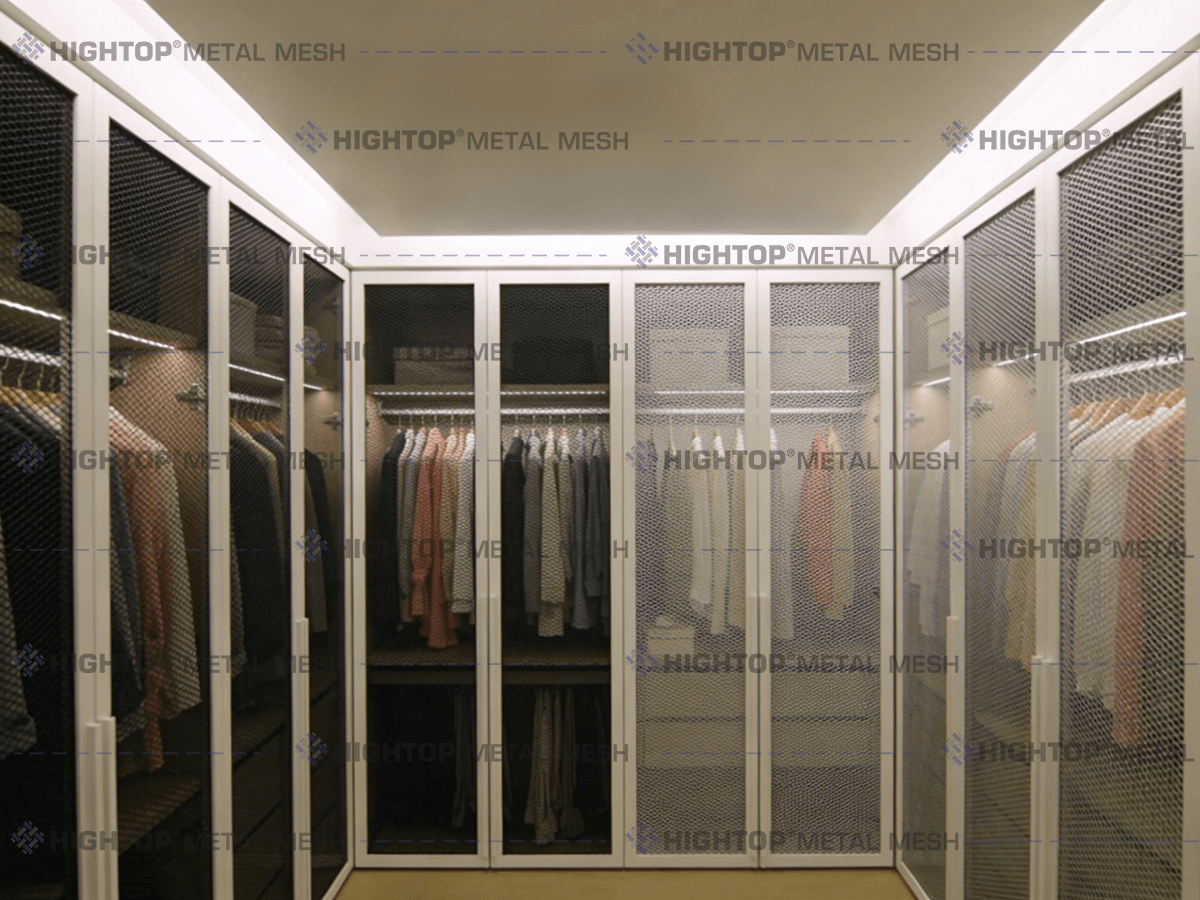
Image title: The Beauty of Order: The Breathing Door of the Cloakroom
Walk-in closets present a unique design challenge: balancing visibility and privacy.
Fully transparent glass doors reveal every detail of the internal storage system, requiring meticulous organization. On the other hand, solid wooden doors may make the closet feel closed and heavy.
Custom decorative crimped wire mesh sliding doors offer a practical alternative. Thanks to the precision of modern manufacturing, mesh aperture tolerances can be controlled within ±0.1 mm, allowing designers to create highly consistent geometric patterns.
A typical configuration might include:
- Wire diameter: 2.0 mm
- Aperture size: 20 mm × 20 mm
- Weave pattern: plain crimped weave
Through the mesh surface, clothing colors and silhouettes remain visible, making it easier to locate items. At the same time, the mesh acts as a soft visual filter, masking clutter while maintaining an organized aesthetic.
The gentle metallic sound produced when sliding the door also adds a subtle tactile dimension to daily use.
Practical Guide: How to Select Decorative Crimped Wire Mesh for Cabinet Doors
While the visual impact of crimped wire mesh is striking, proper selection requires careful consideration of several technical factors.
1. Wire Diameter and Aperture Ratio
For cabinet door applications, the mesh should remain lightweight and visually balanced.
Recommended parameters include:
- Wire diameter: 0.8 mm – 2.5 mm
- Open area ratio: 40% – 60% for privacy
- Open area ratio: 60%+ for maximum transparency
A finer mesh provides greater privacy, while larger openings enhance light transmission and spatial openness.
2. Material Durability and Environmental Resistance
Although cabinet doors are typically installed indoors, they may still be exposed to humidity, cooking fumes, and temperature variations.
For this reason, 304 stainless steel is widely recommended. This material offers:
- Tensile strength: 500–800 MPa
- Excellent corrosion resistance
- Long-term structural stability
These properties make it suitable for use in kitchens, bathrooms, living rooms, and bedrooms.
3. Edge Finishing and Installation
After mesh panels are cut to size, the edges must be properly protected.
The most common installation method is to mount the mesh inside a solid wood or aluminum alloy frame. This approach provides several benefits:
- Protects users from sharp cut wire ends
- Improves the overall visual quality of the cabinet door
- Enhances structural rigidity
Proper framing also allows for easier replacement or maintenance if needed.
The use of decorative crimped wire mesh in cabinet door design represents a successful integration of industrial materials into modern interior aesthetics.
By combining metal strength with textile-like texture, crimped mesh challenges the traditional perception of metal as a cold and purely functional material.
When used in furniture design, the mesh acts almost like a canvas for light and shadow, creating layered visual depth and introducing breathable transparency into living spaces.
Whether applied in industrial-style interiors or contemporary minimalist homes, decorative crimped wire mesh cabinet doors embody a design philosophy that values openness, material authenticity, and spatial rhythm.
Behind every mesh cabinet door lies not just a piece of furniture, but a reflection of a modern lifestyle—transparent, luminous, and full of breathing space.
Frequently Asked Questions About Decorative Crimped Wire Mesh Cabinet Doors
1. What is decorative crimped wire mesh used for in cabinet doors?
Decorative crimped wire mesh is commonly used in cabinet doors to create a semi-transparent barrier that combines ventilation, durability, and modern aesthetics. The mesh allows light and air to pass through while partially concealing the items inside the cabinet.
2. Is crimped wire mesh strong enough for large cabinet doors?
Yes. Due to its crimp-then-weave manufacturing process, crimped wire mesh provides higher structural stability than flat woven mesh. Precision crimping can increase deformation resistance by 30% to 50%, making it suitable for large cabinet doors such as walk-in closet sliding panels.
3. What materials are commonly used for decorative crimped wire mesh?
The most common materials include:
- 304 stainless steel
- 316 stainless steel
- brass
- aluminum
- carbon steel
Among them, 304 stainless steel is widely used in interior cabinet applications because it offers corrosion resistance and long-term durability.
4. Does metal mesh block remote control signals?
No. Decorative wire mesh generally does not significantly block infrared signals, allowing remote controls to operate devices such as TVs and media players through cabinet doors.
5. What mesh specifications are suitable for cabinet doors?
Typical specifications for cabinet doors include:
- wire diameter: 0.8 mm – 2.5 mm
- aperture size: 5 mm – 25 mm
- open area ratio: 40% – 70%
The exact choice depends on the desired balance between privacy, ventilation, and visual transparency.
Please email us via the contact form below, we’ll get back to you as soon as possible.